

Insider Advice for Relocating to Hilton Head & Bluffton
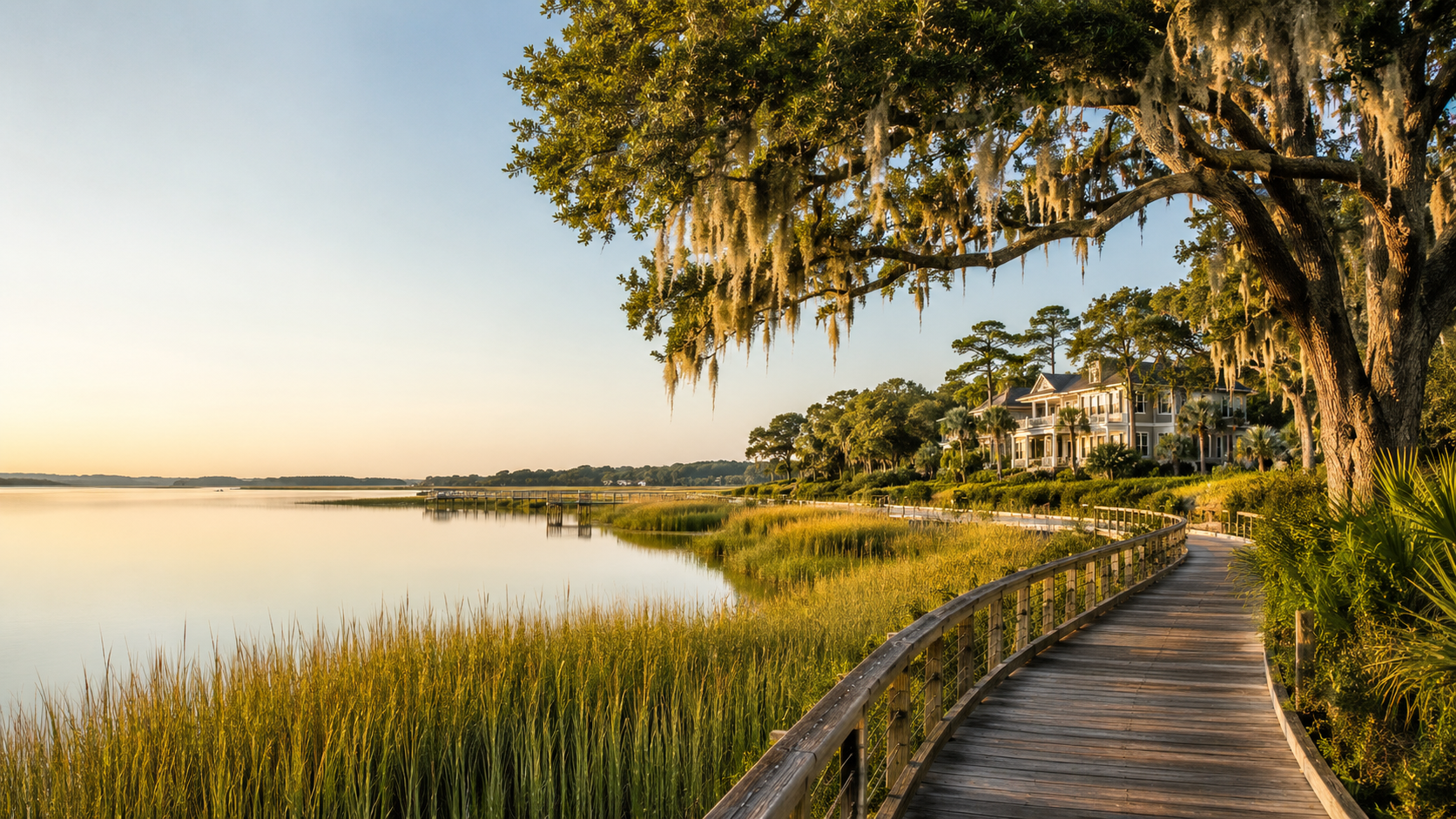
Sabeth Biangone on Finding the Right Community Before the Right Home
Relocating to the South Carolina Lowcountry is rarely just a search for the right house. It is a search for the right way of life.
In this edition of Lowcountry Insider, Charter One Realty agent Sabeth Biangone shares the perspective she gives buyers considering Hilton Head Island and Bluffton, from choosing among the area’s private golf communities to understanding flood zones, insurance, market timing, and the subtle differences that can make one neighborhood a far better fit than another.
With extensive experience in luxury Lowcountry real estate, Sabeth approaches relocation from the lifestyle first, helping buyers understand not simply where they can live, but where they are most likely to feel at home.
Sabeth Biangone: I specialize in luxury golf community real estate in the South Carolina Lowcountry. My entire career has been built inside five of the region's most sought-after gated golf communities: Berkeley Hall, Belfair, Colleton River, Oldfield, and Hampton Hall. If you're relocating to Bluffton or Hilton Head and want an agent who already knows the neighborhoods, the clubs, the builders, and the buyers, that's exactly where I live and work.
Why this matters for a relocating buyer:
Each of these communities has its own personality, price point, and pace, and knowing the difference before you tour is half the battle. Berkeley Hall and Belfair lean toward a more private, low-key country club culture. Colleton River is known for its dual Nicklaus and Dye courses and river access. Oldfield blends golf with equestrian and marina lifestyle options. Hampton Hall offers a slightly more accessible entry point without sacrificing amenities. I can walk a relocating buyer through which one actually fits their life, not just their budget.
Sabeth Biangone: Think of Hilton Head Island as the resort, and Bluffton as the real town next door. Hilton Head is built around its beaches and its plantations, places like Sea Pines, Palmetto Dunes, and Wexford, and the pace of life follows the tourist season. The north end of the island, around Port Royal Plantation and the Hilton Head Plantation area, is where you'll find more full-time locals living a quieter version of island life away from the resort crowds. If you want to walk to the beach and live somewhere designed for vacation living twelve months a year, that's Hilton Head.
Bluffton is a different animal entirely. It has a vibe, an old Southern town with a walkable historic district on the May River, art galleries, local restaurants, and a genuine sense of eclectic character that Hilton Head doesn't really have. But Bluffton is also enormous compared to what most relocating buyers expect. It stretches from that historic core all the way out to master-planned and gated communities covering every price point, including private luxury golf communities like Berkeley Hall, Belfair, Colleton River, Oldfield, and Hampton Hall, plus waterfront neighborhoods along the May River and Colleton River. You can find new construction starting in the high $300,000s or a custom estate well into eight figures, often within a few miles of each other.
Sabeth Biangone: Hilton Head and Bluffton have not experienced a direct catastrophic hurricane strike in the modern era. Hurricane Matthew in 2016 is the most significant storm to affect the area in recent decades.
The other misconception is about the flood maps themselves. FEMA has redrawn and updated flood zone designations for this area, which means the insurance picture on a lot of homes looks different today than it did even five or ten years ago. Buyers who assume a property is in a high-risk, high-premium zone based on outdated information are often surprised, in a good way, once we pull the current flood zone and get an actual quote.
Sabeth Biangone: They wait. Almost every out-of-state buyer I work with hesitates at some point because mortgage rates are higher than they remember from a few years ago, and they assume patience will pay off. In most markets, that might be a reasonable bet. Here, it usually costs them.
Hilton Head and Bluffton are supply-constrained by geography, not by builders slowing down. Hilton Head is a finite barrier island with strict zoning and almost no undeveloped land left to build on, and the most desirable Bluffton communities, especially the private golf and waterfront neighborhoods, aren't creating more inventory either. That scarcity keeps values moving upward year over year, even in a "balanced" market, even when the national headlines say things are cooling off.
So the buyer who waits for rates to drop usually watches the price of the home they wanted go up more than the rate savings were ever going to offset. My advice is almost always the same: buy the right property for your life now, and refinance later if rates come down. You can renegotiate a rate. You can't renegotiate the fact that someone else bought the house.
Sabeth Biangone: I expect continued increases, just at a more normal pace than what we saw during the frenzy of a few years ago. Inventory has grown, days on market have stretched out, and buyers have more room to negotiate than they did in 2021 through 2023. That's a healthier market, not a weaker one. Local reports show median and average sale prices still trending upward year over year even as sales volume levels off, which is exactly what a market normalizing looks like.
The bigger point for a relocating buyer is that Hilton Head and Bluffton don't move in lockstep with the national market. This isn't a job-growth market like Austin or Charlotte, where prices rise and fall with hiring trends. It's a lifestyle and scarcity market. Hilton Head is a finite barrier island that is essentially built out, and Bluffton's most in-demand communities, especially the private golf and waterfront neighborhoods, have limited remaining inventory. That structural scarcity, combined with steady retirement and second-home migration, is why this area has historically held up better than national headlines suggest, and why I expect gradual, sustained appreciation to continue over the next couple of years rather than a sharp swing in either direction.
Sabeth Biangone: I ask what they actually like to do with their time. Not what kind of house they want, not their budget, not even where they've heard is nice. I want to know if they golf, boat, fish, garden, ride horses, want to walk to dinner, or just want quiet and a hammock. That answer tells me more about where they should live than almost anything else they could tell me.
Hilton Head and Bluffton aren't one market with one lifestyle. Every community here is built around a different way of living. Someone who wants an active golf and club scene belongs in a completely different neighborhood than someone who wants equestrian trails, or marina access, or a walkable small-town feel. Get that wrong and you end up with a beautiful house in the wrong life. Get it right and the house almost picks itself.
That's why I always find the community before I find the house. A relocating buyer who starts by scrolling listings is shopping backwards. Start with how you want to spend your Tuesday afternoons, and the right neighborhoods, and eventually the right home, come into focus fast.
Sabeth Biangone: A client of mine, Kelly, bought and sold a home in Sea Pines on Hilton Head Island. Not long after, she called me again. She missed Sea Pines and wanted a villa in one particular section she could walk to the beach from.
That's a hard ask. Villas in that specific pocket of Sea Pines rarely come on the market, and when they do, they tend to move fast through word of mouth before they ever hit a public listing. Instead of waiting on inventory that might not show up for a year, I went directly to the source. I reached out to every villa owner in that specific area to find out who might be willing to sell.
That legwork turned up the exact villa she wanted, in the exact location she wanted, walkable to the beach, in an area of Sea Pines where inventory almost never opens up. It closed, and she got the home she'd been missing since the day she sold her last one.
Sabeth Biangone: CL-100. Every relocating buyer hears this term for the first time during their South Carolina closing process, and almost none of them know what it means walking in. It's the state's official Wood Infestation Report, a required inspection performed by a licensed, state-regulated pest professional who checks the home for termites, other wood-destroying insects, and wood rot, which is an extremely common condition in a humid, coastal climate like ours.
Here's what surprises people most: it's typically the seller's responsibility, not the buyer's. Under the standard South Carolina contract, the seller pays for the CL-100 inspection and is responsible for remediating any active pests and repairing any wood rot the inspector finds before closing. Buyers coming from states where pest inspections work differently, or aren't required at all, often assume this is going to be an out-of-pocket cost or a negotiation point. Most of the time, it isn't.
Sabeth Biangone: I stop talking about houses for a minute and get them living the lifestyle instead. For a client torn on a golf community, most of our private clubs, Berkeley Hall, Belfair, Colleton River, and others, offer what's called a Discovery Package. It's typically a two night, three day stay where you live like a member. You play golf on the courses, use the amenities, have dinner with actual members, and get a real feel for the club culture, not a sales pitch version of it.
That distinction matters more than people expect. You can look at listing photos of a golf community all day and still have no idea whether the people, the pace, or the personality of the club is right for you. A Discovery Package answers a question no spreadsheet can: can I see myself living here?
For clients weighing a golf community against marsh-front or a walkable downtown setting, I'll often suggest they do the same thing informally in each direction. Spend a weekend in a rental or with friends in the area, eat where the locals eat, walk the neighborhood at different times of day. The goal is always the same. Don't choose a lifestyle off a listing sheet. Experience it first, then decide.
Sabeth Biangone: Fall, without question. The heat and humidity finally break, which alone makes it my favorite season here, but it's also when the Lowcountry really shows off. Oyster season kicks in, and there's nothing better than a proper oyster roast on a cool October evening, standing around a fire pit with friends and neighbors while someone shucks the next batch.
October is also when the Historic Bluffton Arts & Seafood Festival takes over Old Town Bluffton. It's been a local tradition for more than two decades, a week of events that builds up to a juried fine art show and street festival, with local seafood, Lowcountry cuisine, live music, and artists from all over the country. It's one of those events that pulls in longtime locals and brand new residents alike, which makes it a genuinely great way for someone relocating here to meet people and feel like part of the community fast.
Between the weather, the festivals, and oyster season, fall is when I think this area makes its best first impression on someone considering a move here.
Sabeth Biangone: First thing, bikes on the beach. Hilton Head is one of the only places I know where riding a bike straight onto hard-packed sand is just a normal Tuesday, and it's the fastest way to make a visitor understand why people fall in love with this island. No tour bus needed, just handlebars and low tide.
Second, I always take people to Savannah for a trolley tour. It's only about 45 minutes away, and it's such an easy day trip that a lot of relocating buyers don't realize how close it is until they've actually lived here. Cobblestone squares, oak trees dripping in Spanish moss, and history around every corner. Friends who visit always end up wanting to go back.
And for dinner, it's Pomodori, hands down. It's a small, family-owned Italian spot on Hilton Head's south end that most tourists walk right past because it's tucked away and doesn't scream for attention. Reservations are a must, but the homemade pasta is worth planning your whole night around. It's the kind of place that makes visitors realize this island has real local life underneath the resort surface.
Sabeth Biangone: I specialize in luxury golf community real estate in the South Carolina Lowcountry. My entire career has been built inside five of the region's most sought-after gated golf communities: Berkeley Hall, Belfair, Colleton River, Oldfield, and Hampton Hall. If you're relocating to Bluffton or Hilton Head and want an agent who already knows the neighborhoods, the clubs, the builders, and the buyers, that's exactly where I live and work.
Why this matters for a relocating buyer:
Each of these communities has its own personality, price point, and pace, and knowing the difference before you tour is half the battle. Berkeley Hall and Belfair lean toward a more private, low-key country club culture. Colleton River is known for its dual Nicklaus and Dye courses and river access. Oldfield blends golf with equestrian and marina lifestyle options. Hampton Hall offers a slightly more accessible entry point without sacrificing amenities. I can walk a relocating buyer through which one actually fits their life, not just their budget.
Sabeth Biangone: Think of Hilton Head Island as the resort, and Bluffton as the real town next door. Hilton Head is built around its beaches and its plantations, places like Sea Pines, Palmetto Dunes, and Wexford, and the pace of life follows the tourist season. The north end of the island, around Port Royal Plantation and the Hilton Head Plantation area, is where you'll find more full-time locals living a quieter version of island life away from the resort crowds. If you want to walk to the beach and live somewhere designed for vacation living twelve months a year, that's Hilton Head.
Bluffton is a different animal entirely. It has a vibe, an old Southern town with a walkable historic district on the May River, art galleries, local restaurants, and a genuine sense of eclectic character that Hilton Head doesn't really have. But Bluffton is also enormous compared to what most relocating buyers expect. It stretches from that historic core all the way out to master-planned and gated communities covering every price point, including private luxury golf communities like Berkeley Hall, Belfair, Colleton River, Oldfield, and Hampton Hall, plus waterfront neighborhoods along the May River and Colleton River. You can find new construction starting in the high $300,000s or a custom estate well into eight figures, often within a few miles of each other.
Sabeth Biangone: Hilton Head and Bluffton have not experienced a direct catastrophic hurricane strike in the modern era. Hurricane Matthew in 2016 is the most significant storm to affect the area in recent decades.
The other misconception is about the flood maps themselves. FEMA has redrawn and updated flood zone designations for this area, which means the insurance picture on a lot of homes looks different today than it did even five or ten years ago. Buyers who assume a property is in a high-risk, high-premium zone based on outdated information are often surprised, in a good way, once we pull the current flood zone and get an actual quote.
Sabeth Biangone: They wait. Almost every out-of-state buyer I work with hesitates at some point because mortgage rates are higher than they remember from a few years ago, and they assume patience will pay off. In most markets, that might be a reasonable bet. Here, it usually costs them.
Hilton Head and Bluffton are supply-constrained by geography, not by builders slowing down. Hilton Head is a finite barrier island with strict zoning and almost no undeveloped land left to build on, and the most desirable Bluffton communities, especially the private golf and waterfront neighborhoods, aren't creating more inventory either. That scarcity keeps values moving upward year over year, even in a "balanced" market, even when the national headlines say things are cooling off.
So the buyer who waits for rates to drop usually watches the price of the home they wanted go up more than the rate savings were ever going to offset. My advice is almost always the same: buy the right property for your life now, and refinance later if rates come down. You can renegotiate a rate. You can't renegotiate the fact that someone else bought the house.
Sabeth Biangone: I expect continued increases, just at a more normal pace than what we saw during the frenzy of a few years ago. Inventory has grown, days on market have stretched out, and buyers have more room to negotiate than they did in 2021 through 2023. That's a healthier market, not a weaker one. Local reports show median and average sale prices still trending upward year over year even as sales volume levels off, which is exactly what a market normalizing looks like.
The bigger point for a relocating buyer is that Hilton Head and Bluffton don't move in lockstep with the national market. This isn't a job-growth market like Austin or Charlotte, where prices rise and fall with hiring trends. It's a lifestyle and scarcity market. Hilton Head is a finite barrier island that is essentially built out, and Bluffton's most in-demand communities, especially the private golf and waterfront neighborhoods, have limited remaining inventory. That structural scarcity, combined with steady retirement and second-home migration, is why this area has historically held up better than national headlines suggest, and why I expect gradual, sustained appreciation to continue over the next couple of years rather than a sharp swing in either direction.
Sabeth Biangone: I ask what they actually like to do with their time. Not what kind of house they want, not their budget, not even where they've heard is nice. I want to know if they golf, boat, fish, garden, ride horses, want to walk to dinner, or just want quiet and a hammock. That answer tells me more about where they should live than almost anything else they could tell me.
Hilton Head and Bluffton aren't one market with one lifestyle. Every community here is built around a different way of living. Someone who wants an active golf and club scene belongs in a completely different neighborhood than someone who wants equestrian trails, or marina access, or a walkable small-town feel. Get that wrong and you end up with a beautiful house in the wrong life. Get it right and the house almost picks itself.
That's why I always find the community before I find the house. A relocating buyer who starts by scrolling listings is shopping backwards. Start with how you want to spend your Tuesday afternoons, and the right neighborhoods, and eventually the right home, come into focus fast.
Sabeth Biangone: A client of mine, Kelly, bought and sold a home in Sea Pines on Hilton Head Island. Not long after, she called me again. She missed Sea Pines and wanted a villa in one particular section she could walk to the beach from.
That's a hard ask. Villas in that specific pocket of Sea Pines rarely come on the market, and when they do, they tend to move fast through word of mouth before they ever hit a public listing. Instead of waiting on inventory that might not show up for a year, I went directly to the source. I reached out to every villa owner in that specific area to find out who might be willing to sell.
That legwork turned up the exact villa she wanted, in the exact location she wanted, walkable to the beach, in an area of Sea Pines where inventory almost never opens up. It closed, and she got the home she'd been missing since the day she sold her last one.
Sabeth Biangone: CL-100. Every relocating buyer hears this term for the first time during their South Carolina closing process, and almost none of them know what it means walking in. It's the state's official Wood Infestation Report, a required inspection performed by a licensed, state-regulated pest professional who checks the home for termites, other wood-destroying insects, and wood rot, which is an extremely common condition in a humid, coastal climate like ours.
Here's what surprises people most: it's typically the seller's responsibility, not the buyer's. Under the standard South Carolina contract, the seller pays for the CL-100 inspection and is responsible for remediating any active pests and repairing any wood rot the inspector finds before closing. Buyers coming from states where pest inspections work differently, or aren't required at all, often assume this is going to be an out-of-pocket cost or a negotiation point. Most of the time, it isn't.
Sabeth Biangone: I stop talking about houses for a minute and get them living the lifestyle instead. For a client torn on a golf community, most of our private clubs, Berkeley Hall, Belfair, Colleton River, and others, offer what's called a Discovery Package. It's typically a two night, three day stay where you live like a member. You play golf on the courses, use the amenities, have dinner with actual members, and get a real feel for the club culture, not a sales pitch version of it.
That distinction matters more than people expect. You can look at listing photos of a golf community all day and still have no idea whether the people, the pace, or the personality of the club is right for you. A Discovery Package answers a question no spreadsheet can: can I see myself living here?
For clients weighing a golf community against marsh-front or a walkable downtown setting, I'll often suggest they do the same thing informally in each direction. Spend a weekend in a rental or with friends in the area, eat where the locals eat, walk the neighborhood at different times of day. The goal is always the same. Don't choose a lifestyle off a listing sheet. Experience it first, then decide.
Sabeth Biangone: Fall, without question. The heat and humidity finally break, which alone makes it my favorite season here, but it's also when the Lowcountry really shows off. Oyster season kicks in, and there's nothing better than a proper oyster roast on a cool October evening, standing around a fire pit with friends and neighbors while someone shucks the next batch.
October is also when the Historic Bluffton Arts & Seafood Festival takes over Old Town Bluffton. It's been a local tradition for more than two decades, a week of events that builds up to a juried fine art show and street festival, with local seafood, Lowcountry cuisine, live music, and artists from all over the country. It's one of those events that pulls in longtime locals and brand new residents alike, which makes it a genuinely great way for someone relocating here to meet people and feel like part of the community fast.
Between the weather, the festivals, and oyster season, fall is when I think this area makes its best first impression on someone considering a move here.
Sabeth Biangone: First thing, bikes on the beach. Hilton Head is one of the only places I know where riding a bike straight onto hard-packed sand is just a normal Tuesday, and it's the fastest way to make a visitor understand why people fall in love with this island. No tour bus needed, just handlebars and low tide.
Second, I always take people to Savannah for a trolley tour. It's only about 45 minutes away, and it's such an easy day trip that a lot of relocating buyers don't realize how close it is until they've actually lived here. Cobblestone squares, oak trees dripping in Spanish moss, and history around every corner. Friends who visit always end up wanting to go back.
And for dinner, it's Pomodori, hands down. It's a small, family-owned Italian spot on Hilton Head's south end that most tourists walk right past because it's tucked away and doesn't scream for attention. Reservations are a must, but the homemade pasta is worth planning your whole night around. It's the kind of place that makes visitors realize this island has real local life underneath the resort surface.
Local Perspective for Your Lowcountry Move
What type of property do you know better than anyone else?
Hilton Head or Bluffton: how do you explain the difference to someone who's never visited?
What's the biggest misconception buyers have about hurricane risk or insurance costs before they talk to you?
What's a mistake you see out-of-state buyers make again and again?
Where do you think Hilton Head and Bluffton prices are headed over the next couple of years?
What's the first question you ask a new client, and why that one?
What's a recent deal or client story you're proud of, and what made it work?
What's a Lowcountry-specific term or quirk that trips up new buyers every time?
If a client's torn between a few very different options like a golf community, marsh-front, or walkable downtown, how do you help them sort out what they actually want?
What's a Lowcountry tradition or season you actually look forward to?
If a friend from your hometown visited for 48 hours, where would you take them, no tourist traps?
Local Perspective for Your Lowcountry Move
What type of property do you know better than anyone else?
Hilton Head or Bluffton: how do you explain the difference to someone who's never visited?
What's the biggest misconception buyers have about hurricane risk or insurance costs before they talk to you?
What's a mistake you see out-of-state buyers make again and again?
Where do you think Hilton Head and Bluffton prices are headed over the next couple of years?
What's the first question you ask a new client, and why that one?
What's a recent deal or client story you're proud of, and what made it work?
What's a Lowcountry-specific term or quirk that trips up new buyers every time?
If a client's torn between a few very different options like a golf community, marsh-front, or walkable downtown, how do you help them sort out what they actually want?
What's a Lowcountry tradition or season you actually look forward to?
If a friend from your hometown visited for 48 hours, where would you take them, no tourist traps?
SABETH BIANGONE
I always find the community before I find the house.
Posted by Paige Rose on
Leave A Comment